Schweizer 1-7 Utility Glider
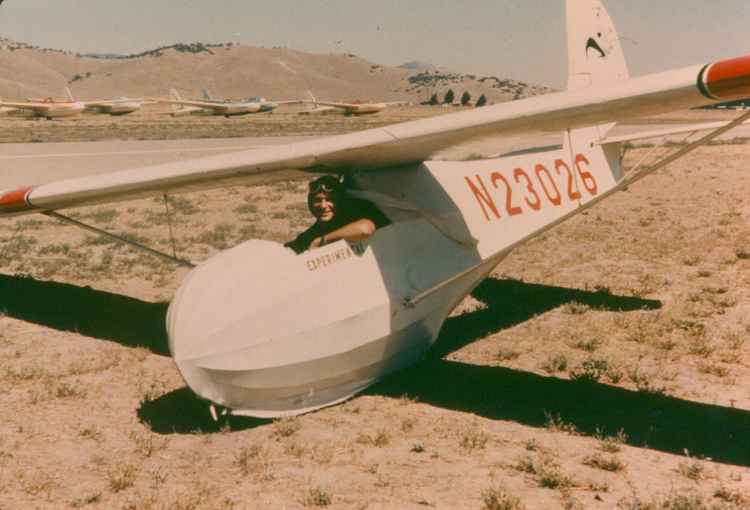
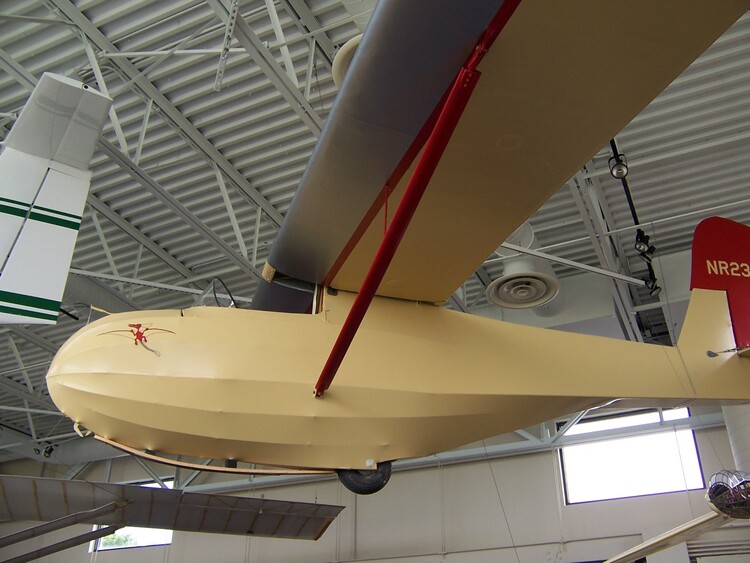
The Schweizer SGU 1-7 is an American Open Class, single seat, high wing strut braced glider built by Schweizer Metal Aircraft Company of Elmira, NY. The 1-7 is all metal except for the fabric covering of the fuselage, tail surfaces and rear portion of the wing. The wing is of single spar, single strut design with a metal-covered leading edge. All material is aluminum alloy except the fittings and bolts. The fuselage is of rugged steel tube with aluminum fairing members. It has a single 5 by 4 inch landing wheel with a nose skid. The tail surfaces are built of formed aluminum alloy members, the fin being internally braced and the stabilizer braced by single struts. The absence of wires and the use of single struts makes assembly quick and easy.
The first 1-7 was built in 1937 and the second one was completed in 1938.
The 1-7 was the first Schweizer aircraft produced as more than a single example and it was the first aircraft sold by the company.
Schweizer Aircraft started construction of the 1-7 prototype in 1937. Shortly afterward, the SGU 1-6 came in third in the 1937 Eaton Design Contest. The intention was that the winning design would be made available as drawings and kits for amateur construction and that Bureau of Air Commerce certification would be sought.
The 1-6 had not fared well in the competition and none of the winners in the contest had proven as easy to construct as the contest organizers had hoped. As a result of the lessons learned in the contest a new clean sheet design was started by the Schweizer brothers.
The resulting single seater-seventh design 1-7 was quite different from the 1-6. The 1-6 had been an all-metal design including aluminum-covered wings and was the first all-metal glider ever built.
The 1-7 was designed to use more traditional methods and has a steel-tube fuselage frame covered in aircraft fabric. The wing is a constant chord, single spar, strut-braced type, including jury struts. The wing and horizontal tail are built from aluminum with fabric covering. The aircraft was designed to be as simple and inexpensive as possible to construct, even at the cost of higher performance.
The 1-7 design was never certified and both aircraft completed were registered as experimental amateur-built aircraft.
While only two Schweizer SGU 1-7s were built, the type was the beginning of a long line of Schweizer gliders based upon this design. The 1-7 led directly to the improved single place Schweizer SGU 1-19 and the long-wing Schweizer SGU 1-20. With two seats installed, the basic design became the Schweizer SGU 2-22 trainer and finally evolved into the Schweizer SGS 2-33.
SGU 1-7 serial number 1 was completed in 1937. It was later destroyed by mistake as scrap.
SGU 1-7 serial number 2 was completed in 1938 and registered as N23026. It had a long career, until its flight certificate expired in 2017.
The aircraft was originally sold to the Altosaurus Soaring Club of North Conway, NH for $595. This club was formed by a group of Harvard University skiers from the Schussverien Ski Club. They used the single-seat 1-7 to teach themselves to fly by auto tow and winch launch. The aircraft was thought by the club members to resemble a pterodactyl in flight and was painted with one on both sides of the aircraft's nose.
The aircraft was sold in the 1950s to Lloyd Licher, who was then general manager of the Soaring Society of America. He who flew it often in California, including at the cliff soaring site at Torrey Pines.
The aircraft was later owned by Ralph Heide of El Segundo, California in the 1980s. He carried out a complete restoration of the aircraft in the mid-1980s.
Today 1-7 serial number 2 belongs to the National Soaring Museum.
-
The National Soaring Museum
-
Harris Hill History
-
Bowlus Senior Albatross
-
Alby
-
Evans Trophy
-
Barographs
-
What is Gliding?
-
What is Soaring?
-
Ridge Soaring
-
Thermal Soaring
-
Schweizer 1-26
-
Baker-McMillen Cadet
-
Gross Sky Ghost
-
1937 Winch Truck
-
Chanute - Herring Glider
-
Shock Cord Launch
-
1902 Wright Glider Replica
-
Primary Glider
-
Ralph Barnaby Glider Launch from Dirigible
-
1935 Wolf
-
Olympia Meise
-
Midwest Utility Glider - MU-1
-
Franklin PS-2
-
Minimoa
-
BA-102 Two-Place Baby Albatross
-
Bowlus Baby Albatross
-
CG-4
-
LK-10A
-
BG-12BD
-
Ross-Johnson RJ-5
-
Bowlus Super Albatross
-
1911 Wright Glider Replica
-
Schleicher Ka6E
-
Slingsby Kirby Gull
-
Marske Genesis II
-
Zanonia
-
Orlik II
-
Glasflugel H-301 Libelle
-
HP 18
-
Flying Plank
-
Schweizer TG-3
-
Schweizer / SGP 1-1 Primary Glider
-
Schweizer 2-22A
-
Schweizer 1-35
-
Schweizer 1-7 Utility Glider