Barographs
In 1905, the International Federation of Aeronautics was formed in Paris France, with the expressed purpose “to regulate the sport of flying”. Altitude records were points of focus from the earliest days of aviation; for example, Arch Hoxsey, flying a Wright Model B, climbed to 11,474 feet in December 1910. Obviously, some kind of a device would have been required to provide proof of his attained altitude.
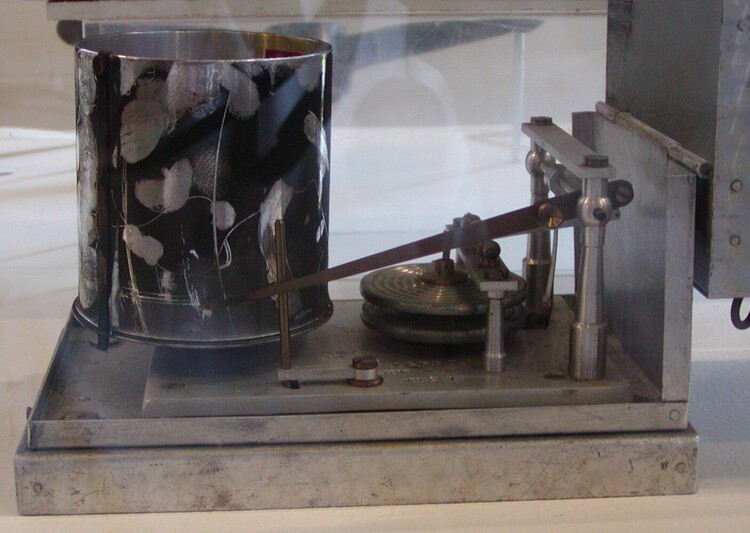
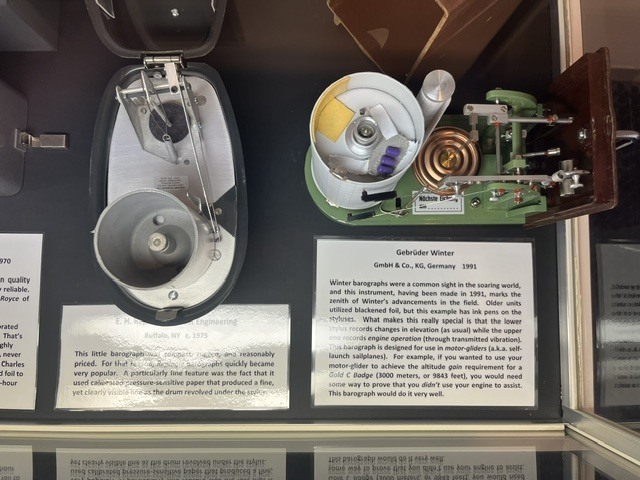
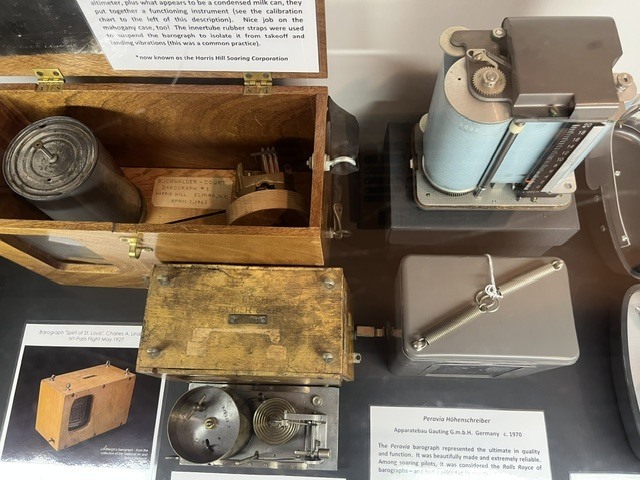
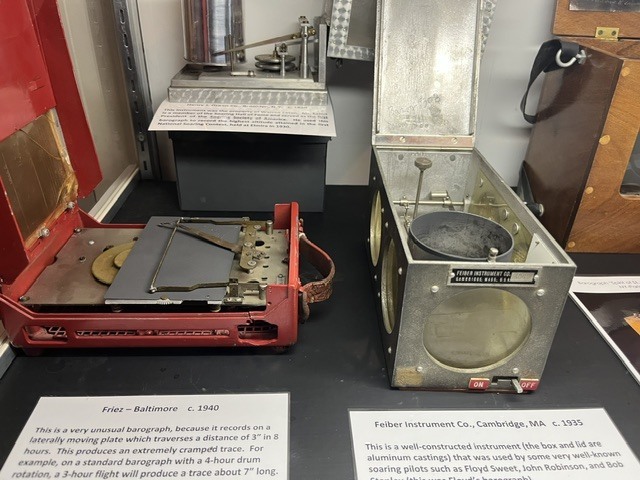
The barograph has actually been around since the 1790s. It is nothing more than a recording aneroid barometer. Altering it for aviation use simply required recalibration for altitude indication as opposed to barometric pressure. Any official record to be submitted to the International Federation of Aeronautics required a barograph tracing. This rule applied to altitude and distance flights. For example, Charles Lindberg was required to carry a barograph on his trans-Atlantic flight, a fact not generally known. We have in this exhibit, a barograph of the same make and model that he used on his 1927 flight from New York to Paris.
In September 1930, the first U.S. National Soaring Contest was held here at Elmira and the first prize for altitude gain was won by Warren Eaton, who reached 2,400 feet. His barograph is also on exhibit, included in a collection of these most interesting devices. By the late 1990s, GPS made the use of the barograph a thing of the past.
-
The National Soaring Museum
-
Harris Hill History
-
Bowlus Senior Albatross
-
Alby
-
Evans Trophy
-
Barographs
-
What is Gliding?
-
What is Soaring?
-
Ridge Soaring
-
Thermal Soaring
-
Schweizer 1-26
-
Baker-McMillen Cadet
-
Gross Sky Ghost
-
1937 Winch Truck
-
Chanute - Herring Glider
-
Shock Cord Launch
-
1902 Wright Glider Replica
-
Primary Glider
-
Ralph Barnaby Glider Launch from Dirigible
-
1935 Wolf
-
Olympia Meise
-
Midwest Utility Glider - MU-1
-
Franklin PS-2
-
Minimoa
-
BA-102 Two-Place Baby Albatross
-
Bowlus Baby Albatross
-
CG-4
-
LK-10A
-
BG-12BD
-
Ross-Johnson RJ-5
-
Bowlus Super Albatross
-
1911 Wright Glider Replica
-
Schleicher Ka6E
-
Slingsby Kirby Gull
-
Marske Genesis II
-
Zanonia
-
Orlik II
-
Glasflugel H-301 Libelle
-
HP 18
-
Flying Plank
-
Schweizer TG-3
-
Schweizer / SGP 1-1 Primary Glider
-
Schweizer 2-22A
-
Schweizer 1-35
-
Schweizer 1-7 Utility Glider