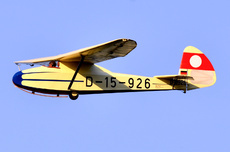
1935 Wolf
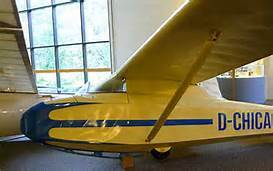
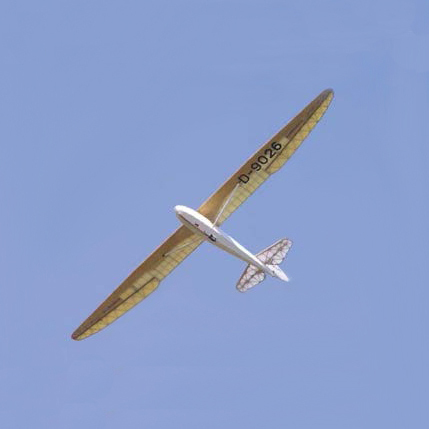
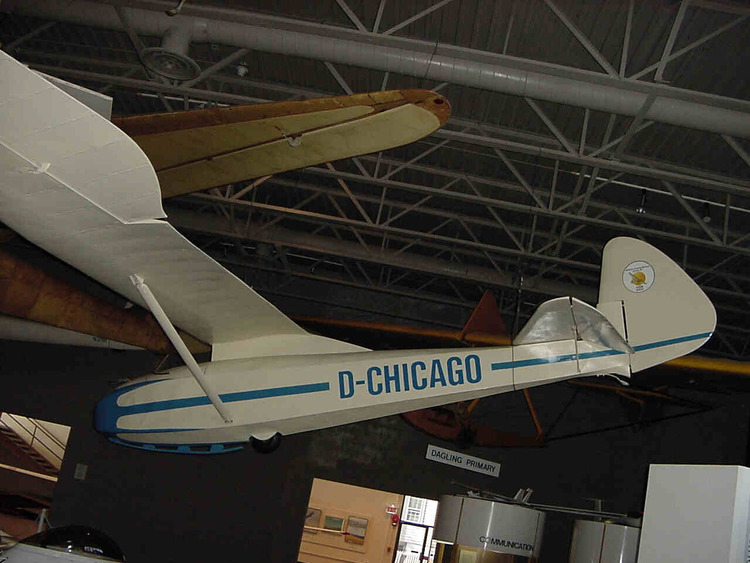
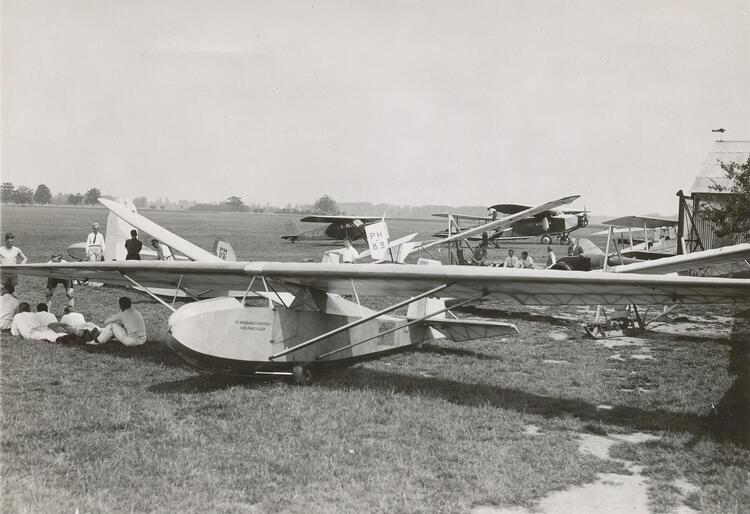
The Wolf was the first product of the newly formed Martin Schempp firm. It was a conventional, strut-braced high-wing design of wooden construction, incorporating a wheel aft of the loaded centre of gravity to ease ground handling, as well as aero-tow and winch launches.
The Wolf had strut-braced high set monoplane wings supported on a pylon aft of the cockpit. The hexagonal section fuselage was constructed largely of wood with plywood skinning. The wings and tail surfaces were plywood skinned back to the main spars with wooden framed fabric-covered rear portions. The undercarriage consisted of rubber sprung skids under the nose and tail with a fixed main wheel aft of the loaded center of gravity.
Stressed for aerobatics, one example was purchased and flown under tow directly to London. During early flying with the Wolf, it gained a reputation for dangerous spinning characteristics, which resulted in it being grounded in 1938, pending incorporation of modified long and wider-chord, slotted ailerons.
The cost of the required modifications proved too expensive for the majority of owners and most of these gliders never flew again. Only three are known to have survived in museums.
-
The National Soaring Museum
-
Harris Hill History
-
Bowlus Senior Albatross
-
Alby
-
Evans Trophy
-
Barographs
-
What is Gliding?
-
What is Soaring?
-
Ridge Soaring
-
Thermal Soaring
-
Schweizer 1-26
-
Baker-McMillen Cadet
-
Gross Sky Ghost
-
1937 Winch Truck
-
Chanute - Herring Glider
-
Shock Cord Launch
-
1902 Wright Glider Replica
-
Primary Glider
-
Ralph Barnaby Glider Launch from Dirigible
-
1935 Wolf
-
Olympia Meise
-
Midwest Utility Glider - MU-1
-
Franklin PS-2
-
Minimoa
-
BA-102 Two-Place Baby Albatross
-
Bowlus Baby Albatross
-
CG-4
-
LK-10A
-
BG-12BD
-
Ross-Johnson RJ-5
-
Bowlus Super Albatross
-
1911 Wright Glider Replica
-
Schleicher Ka6E
-
Slingsby Kirby Gull
-
Marske Genesis II
-
Zanonia
-
Orlik II
-
Glasflugel H-301 Libelle
-
HP 18
-
Flying Plank
-
Schweizer TG-3
-
Schweizer / SGP 1-1 Primary Glider
-
Schweizer 2-22A
-
Schweizer 1-35
-
Schweizer 1-7 Utility Glider