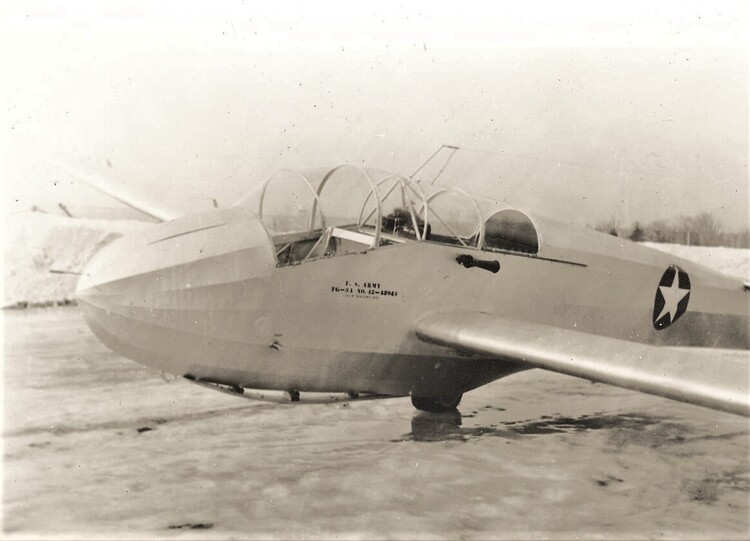
Schweizer TG-3
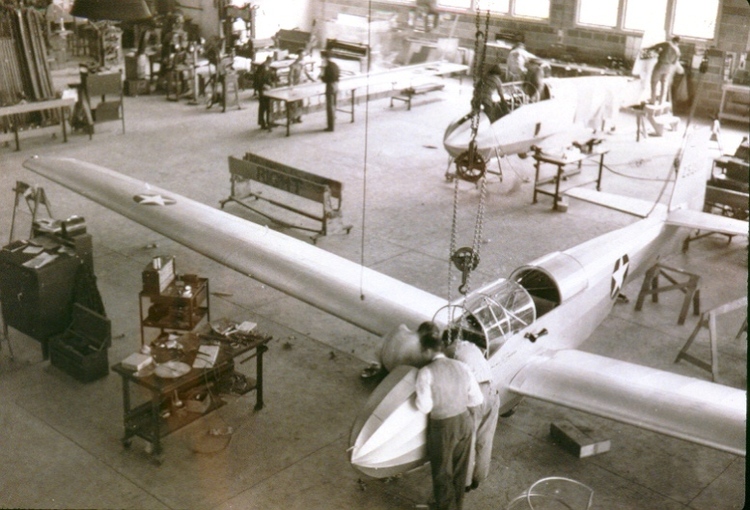
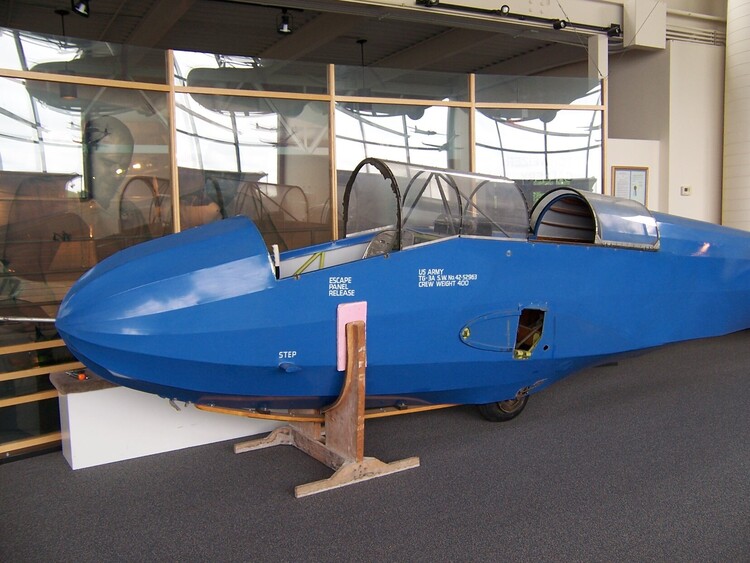
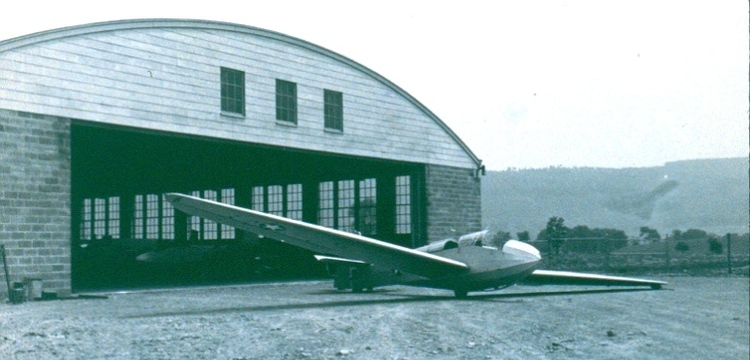
The Schweizer TG-3 is a two seat, low wing, training glider with an all-wooden wing, built by Schweizer Aircraft of Elmira, NY for the Army Air Force to train glider pilots for air assault missions during WWII.
When the US entered WWII in 1941, none of the armed services had a glider program. The German use of glider-borne attack in the Battle of Crete, convinced the US military that they would need glider-borne forces of their own.
Initially the United States Army Air Force contracted Schweizer for the construction of the existing SGS 2-8, which entered service as the Army TG-2 and the US Navy and US Marine Corps LNS-1. The TG-2 was a good glider trainer, but had fabric-covered aluminum wings. Aluminum was designated as a strategic material, and its use was to be avoided in training aircraft to conserve it for combat aircraft. Schweizer was therefore asked to design a new glider that would not use aluminum.
Work began on the new model SGS 2-12 in the winter of 1941-42 as production of the 2-8 was getting under way.
The 2-12 had a wooden wing, replacing the aluminum wing on the 2-8. Since the wing was being redesigned, several other improvements requested by the US Army Air Force were incorporated into the design, including simplifying the design for mass production.
The new wing was 2 feet greater in span, giving it a slightly better glide ratio than the two eight. The greater span also helped make up for the additional weight of the aircraft. Typical empty weights were almost double that of the 2-8 at 860 lbs.
The wing was also thicker, with a thicker spar, which allowed the elimination of the struts that the 2-8 had used, while permitting a higher redline speed. The wing was also moved from a mid-wing position to a low-wing, to improve the instructor's visibility from the rear cockpit. The new wing also incorporated balanced top and bottom surface divebrakes, replacing the 2-8's top surface spoilers.
The 2-12 has a welded steel tube fuselage covered in aircraft fabric. The wooden wings are also covered in fabric.
After the war was over, the 2-12 received type certificate G-2-11 on 27 February 1947. All aircraft are officially FAA certificated as TG-3s, rather than SGS 2-12s.
A total of 113 TG-3s were built for US Army Air Force use.
All remaining military TG-3s were sold to gliding schools and individuals at the end of the war. One civil SGS 2-12 was completed by Schweizer for factory use at the very end of the military TG-3 production line, bringing the total completed to 114.
The SGS 2-12 is a large and heavy glider. It is also difficult and time-consuming to remove the wings for trailering or storage. After the war, when many were in civil service, these factors resulted in many being tied down outside, rather than being protected in trailers. The wooden wings on many suffered deterioration as a result of exposure to the weather
On November 4, 1945, Frank Hurtt and Paul Schweizer broke the multi-place duration record in a TG-3. The flight was flown at Harris Hill in ridge lift and lasted 9 hours and 17 minutes and was the first post war record set in the USA.
In 1950 Harland Ross set a new altitude record with a 2-12 flight to 36,100 feet.
Betsy Woodward set the woman's altitude record in a 2-12 as well.
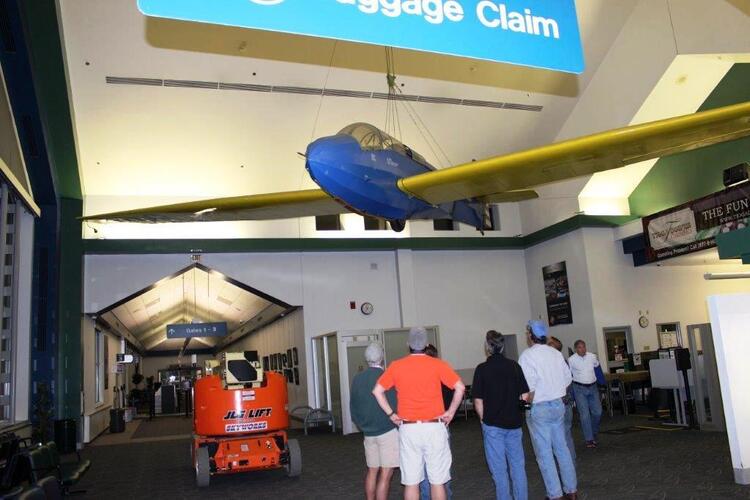
The museum's TG-3 was donated in 1983 by Les Arnold.
The TG-3 was used by the US Air Force Academy for cross-country and spin training until 2002.
-
The National Soaring Museum
-
Harris Hill History
-
Bowlus Senior Albatross
-
Alby
-
Evans Trophy
-
Barographs
-
What is Gliding?
-
What is Soaring?
-
Ridge Soaring
-
Thermal Soaring
-
Schweizer 1-26
-
Baker-McMillen Cadet
-
Gross Sky Ghost
-
1937 Winch Truck
-
Chanute - Herring Glider
-
Shock Cord Launch
-
1902 Wright Glider Replica
-
Primary Glider
-
Ralph Barnaby Glider Launch from Dirigible
-
1935 Wolf
-
Olympia Meise
-
Midwest Utility Glider - MU-1
-
Franklin PS-2
-
Minimoa
-
BA-102 Two-Place Baby Albatross
-
Bowlus Baby Albatross
-
CG-4
-
LK-10A
-
BG-12BD
-
Ross-Johnson RJ-5
-
Bowlus Super Albatross
-
1911 Wright Glider Replica
-
Schleicher Ka6E
-
Slingsby Kirby Gull
-
Marske Genesis II
-
Zanonia
-
Orlik II
-
Glasflugel H-301 Libelle
-
HP 18
-
Flying Plank
-
Schweizer TG-3
-
Schweizer / SGP 1-1 Primary Glider
-
Schweizer 2-22A
-
Schweizer 1-35
-
Schweizer 1-7 Utility Glider