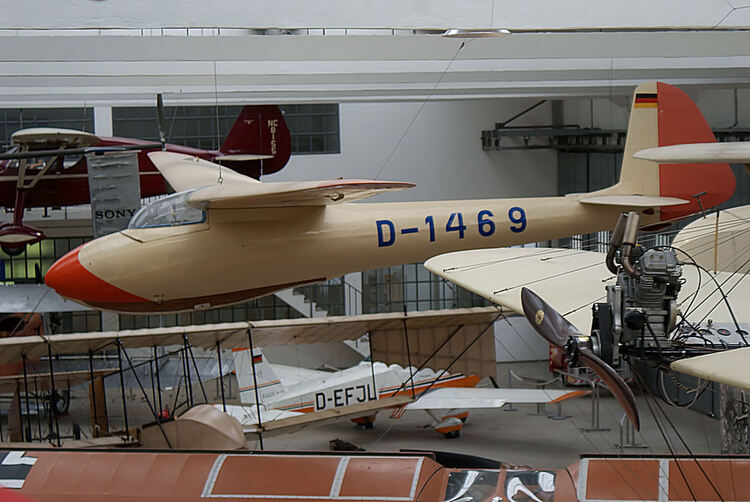
Olympia Meise
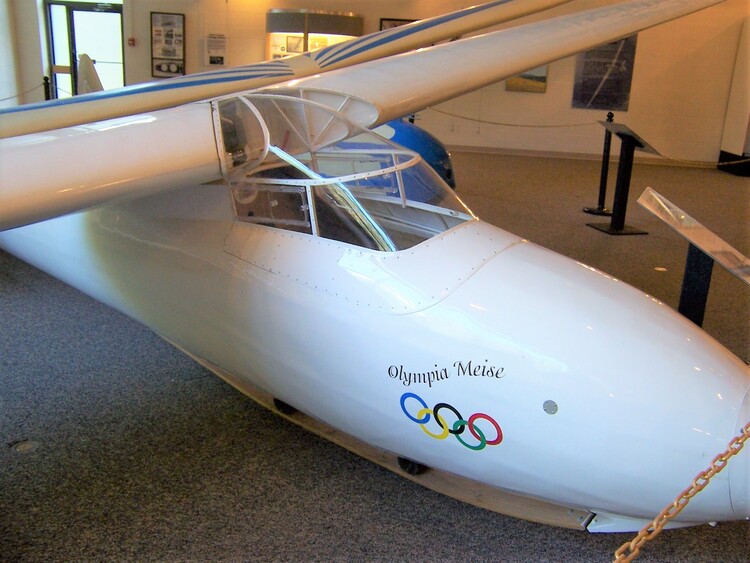
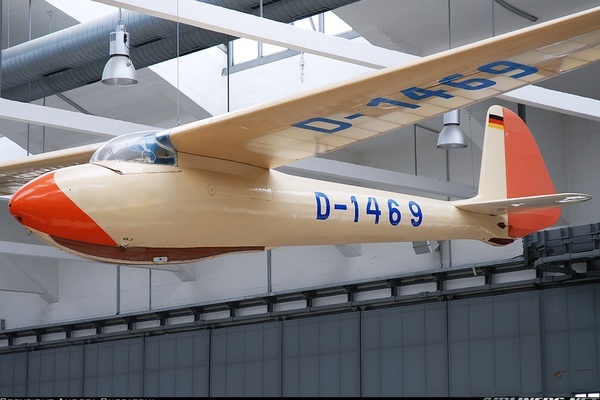
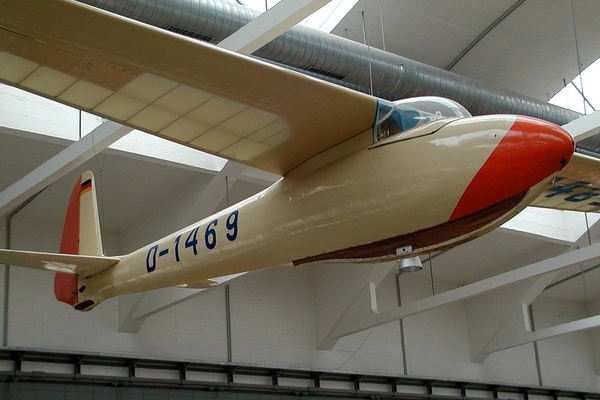
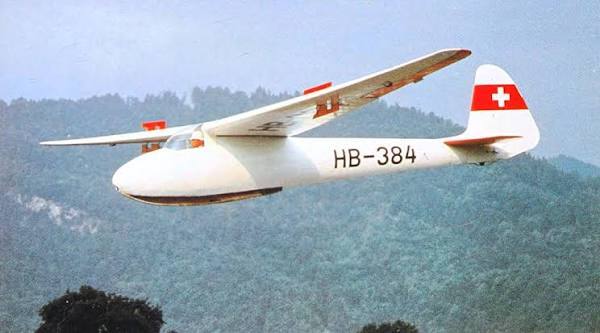
The Olympia Meise was a German sailplane designed by DFS for Olympic competition, based on the DFS Meise.
After the Olympic games in Berlin in 1936 introduced gliding as an Olympic sport, plans were made to fly the 1940 Olympic championships with a standard design of sailplane to give each pilot the same chances. As a result of this, the Meise was redesigned to fit into the new Olympic class specifications. The new Olympia Meise had the prescribed wingspan of 15 meters, spoilers but no flaps, and an undercarriage consisting of a skid and a non-retractable wheel. The pilot sat all-enclosed in an aerodynamically clean fuselage made of laminated wood and topped by an acrylic glass hood. The plane could be launched by winch as well by airplane. Its wood and fabric construction made it easy for flying clubs to maintain, repair and even build the gliders from kits.
A design contest to select the single Olympic glider was run by testing the prototypes of the entered and accepted designs at Sezze Airfield in Italy between February 20 to 26, 1939. There were six evaluation pilots of different nationalities. They chose Hans Jacobs’ design, the DFS Meise.
Both the Meise as well as the Olympic class gained immediate enthusiastic support, and the 1940 Olympic gliding championship would probably have ended up as an all-Meise contest if WWII had not intervened and the 1940 Olympics had not been cancelled. Nevertheless, 626 Olympia Meises were built in Germany during the war. Most of the German production were among the 15,000 German gliders destroyed in 1945. Seventeen were also built at the same time in Sweden.
The design of the Olympia Meise, however survived the war and was taken up by a small British firm called Chilton Aircraft Ltd. The German drawings were not detailed and so entirely new drawings were made that retained the Olympia Meise's aerodynamic shape but otherwise it was a stronger and heavier aircraft. After building one prototype which flew in 1946, the rights and drawings of Chilton aircraft were taken up by another British company, Elliotts of Newbury
-
The National Soaring Museum
-
Harris Hill History
-
Bowlus Senior Albatross
-
Alby
-
Evans Trophy
-
Barographs
-
What is Gliding?
-
What is Soaring?
-
Ridge Soaring
-
Thermal Soaring
-
Schweizer 1-26
-
Baker-McMillen Cadet
-
Gross Sky Ghost
-
1937 Winch Truck
-
Chanute - Herring Glider
-
Shock Cord Launch
-
1902 Wright Glider Replica
-
Primary Glider
-
Ralph Barnaby Glider Launch from Dirigible
-
1935 Wolf
-
Olympia Meise
-
Midwest Utility Glider - MU-1
-
Franklin PS-2
-
Minimoa
-
BA-102 Two-Place Baby Albatross
-
Bowlus Baby Albatross
-
CG-4
-
LK-10A
-
BG-12BD
-
Ross-Johnson RJ-5
-
Bowlus Super Albatross
-
1911 Wright Glider Replica
-
Schleicher Ka6E
-
Slingsby Kirby Gull
-
Marske Genesis II
-
Zanonia
-
Orlik II
-
Glasflugel H-301 Libelle
-
HP 18
-
Flying Plank
-
Schweizer TG-3
-
Schweizer / SGP 1-1 Primary Glider
-
Schweizer 2-22A
-
Schweizer 1-35
-
Schweizer 1-7 Utility Glider