Bala Thiagarajan "Not 99 Percent"
I am Bala Thiagarajan, an Indian immigrant artist based in Arvada, Colorado. My work explores identity, belonging, and the ways cultural narratives shape how people and places are seen. Through this installation, I explore the tension between visibility and invisibility, especially within spaces where certain communities are assumed to be absent or peripheral.
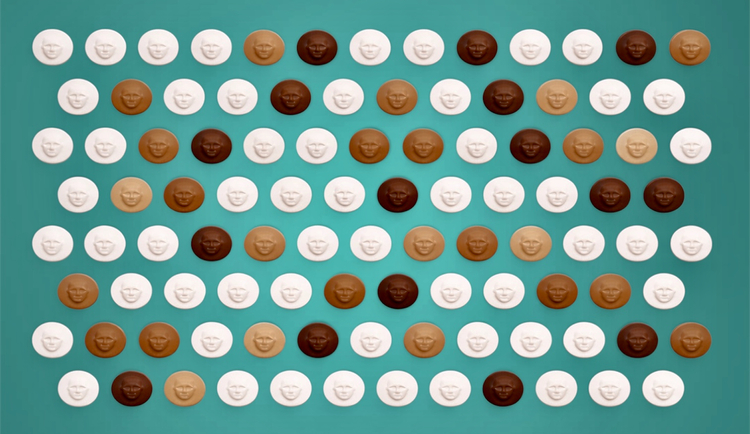
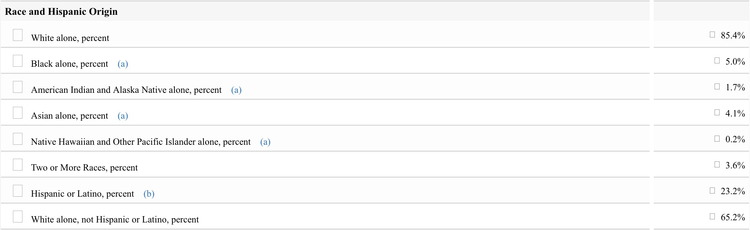
Not 99% began with a comment I heard repeatedly after moving to Colorado: that the state, or the American West more broadly, is “basically 99% white. Though statistically inaccurate, that assumption shapes how the region is imagined culturally, socially, and artistically. Colorado itself is only about 65% white, yet people’s perceptions of who occupies the land are often shaped by the spaces they move through daily. When social circles, neighborhoods, workplaces, or cultural institutions remain predominantly white, those environments can come to feel representative of the region as a whole.
This installation consists of one hundred almost similar but unique sculpted faces painted across a range of skin tones. Many of the non-white faces are subtly tilted within the grid, disrupting the visual order and quietly “tilting” the structure itself.
The work is not only about demographics. It is about visibility, representation, and the assumptions that shape decision-making within the arts landscape. There is often an underlying belief that predominantly white audiences are the primary supporters, collectors, or consumers of art, and these assumptions influence whose work is exhibited, funded, collected, and institutionally supported. But the contemporary West is far more diverse, layered, and interconnected than many of its dominant cultural narratives suggest.
Not 99% asks what happens when the people who already make up the landscape are fully acknowledged within it, not as exceptions or additions, but as part of the visual and cultural identity of the region itself. The work ultimately imagines a broader and more expansive understanding of the West, one that reflects the many communities, histories, and perspectives already shaping its future.
-
Grant Adams "Cowgirl Scene"
-
Florence Alfano McEwin "Fire Summer - Sage"
-
Asma Al-Masyabi "False Front"
-
Reen Axtell "Wildflower"
-
Alicia Bailey "An Autobiography Book Two Variant 2"
-
Libby Barbee "Astral America"
-
Andrew Beckham "Ghost Flowers: Big Rooted Spring Beauty at Taylor Glacier CO"
-
Marc Billard "Mountain Meditation 3"
-
Brenda Biondo "Unnatural (Tumbleweeds)"
-
Garret Bock "The Abduction of Billy the Kid"
-
John Bonath "Ghost"
-
Michael Brohman "Frontier"
-
Robert Burch "Barbed Vases"
-
Al Canner "Dusk Rising"
-
Andrea Caretto "My Favorite Shirt"
-
D. Wayne Cochran
-
Rebecca Cuming "Earth Song"
-
Pete Cunis "Underground Complex"
-
Corey Drieth "Reveal #2"
-
Norman Epp "Mother Tree - Fence Line Conversation"
-
Melody Epperson "Voices From the Land"
-
Corrina Espinosa "Rerun: A Western Temporal Paradox"
-
Douglas Fey "Encroachment"
-
J. Michael Gatlin "Grain Elevator"
-
Christy Georg "Untitled (Sailor's Saddle)"
-
Maureen Hearty "Mining My Own Business"
-
Alexander Heilner "Intrepid Potash Mine"
-
Alexander Heilner "Las Vegas Paiute Golf Resort"
-
Tsehai Johnson "Bloom"
-
Vicki Lee Johnston "Ford Fur"
-
Anna Kaye "Magnify"
-
Eric Laurson
-
Jim Leggitt "Lost Stories: Central City"
-
Frank Lucero "Enchantment"
-
Chris May "Spirit Chasers"
-
Susan Moldenhauer "Insignia"
-
Johanna Mueller "Crossing Paths at Devils Gultch"
-
Sean O'Meallie "A Jar of Candy Poppers"
-
Corey Pickett "Untitled - Revolver and Ray Gun"
-
R. Ragels
-
Sangeeta Reddy "Garden of the Gods#2"
-
Kim Roberts "Sundown"
-
William Rumley "The Gift"
-
William Rumley "Memory of a Goldfish"
-
William Rumley "Moth to Flame"
-
William Rumley "Out with the Old, In with the New"
-
William Rumley "Pronouns"
-
William Rumley "Three Blind Mice"
-
William Rumley " Allure Series Statement"
-
Pedro Saldarriaga "Rodeo Rider No. 10"
-
Heather Schulte "Oh, Give Me a Home"
-
Sharon Strasburg "Distant Rhythms"
-
Brenda Stumpf "Validus"
-
Bala Thiagarajan "Not 99 Percent"
-
Mary Williams "Bronze Aspen Totem"