Impression
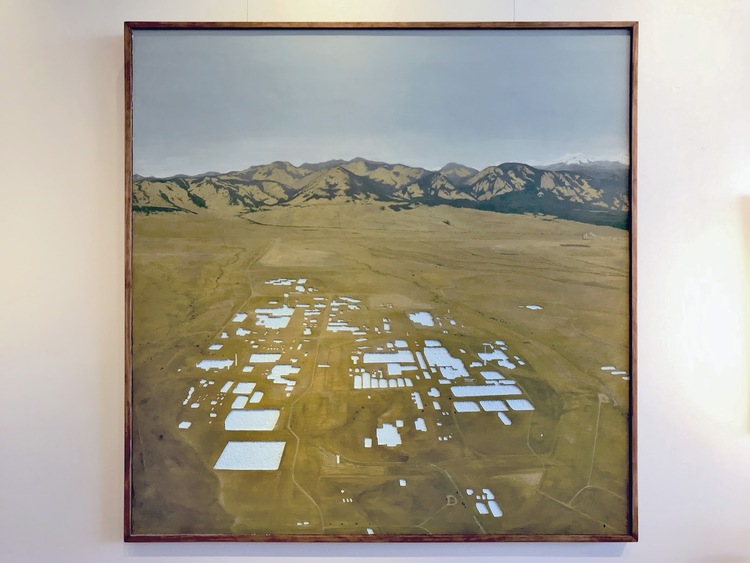
Impression presents a landscape marked by the former Rocky Flats Nuclear Weapons Plant. The plant’s footprint is extruded from the surface, exposing an underlying substrate manufactured by Dow Chemical, the site’s original operator.
Between 1952 and 1989, The Rocky Flats plant produced an estimated 70,000 plutonium “triggers,” for thermonuclear weapons. During its Cold War operations, radioactive accidents and routine releases spread contamination across the Denver metropolitan area. The site later became infamous for environmental violations, sustained public protest, and an unprecedented FBI raid.
After the plant operator pleaded guilty to environmental crimes, Rocky Flats underwent a multi-billion-dollar remediation effort, and the surrounding land was reclassified as a national wildlife refuge. While the plant’s infrastructure is now largely invisible, its most radioactive buildings were imploded and buried in place, and plutonium contamination from decades of releases remains dispersed across the landscape, where it will persist with a radioactive half-life of 24,100 years.
The transformation of the site from a nuclear weapons factory into an ecological and recreational space has coincided with a decline in public awareness of its history of nuclear production, environmental harm, and unresolved contamination. Impression captures the tension of this landscape within this transition, emphasizing how the physical traces of industrial activity remain embedded in the land even as its legacy is reframed or forgotten.
-
Half-Life of Memory
-
What is Rocky Flats?
-
Voices of Rocky Flats
-
Alchemy: Photographs Taken near the Former Rocky Flats Nuclear Weapons Plant
-
Untitled - Homage to Robert Adams' Our Lives and Our Children: Photographs Taken near the Rocky Flats Nuclear Weapons Plant
-
Broncos/Horses and Rocky Flats
-
Who Controls the Present Controls the Past
-
Trigger
-
Containment Loop
-
Body Burden
-
#771
-
Impression
-
View From the Road
-
Critical Mass
-
Disposition
-
Powder Keg
-
Fallout
-
Rocky Flats Film Trailers
-
Cold War Horse
-
Timeline