#771
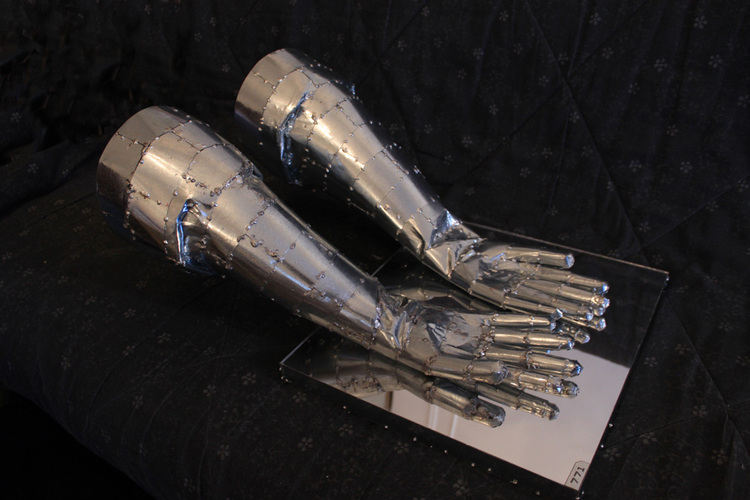
#771 was conceived as a scale model for a monument intended to acknowledge the labor and sacrifices of Cold War workers while confronting the broader consequences of nuclear weapons production. The sculpture depicts industrial lead-lined gloves descending from a suggested glovebox, referencing the sealed systems used at the Rocky Flats Nuclear Weapons Plant to handle plutonium and other radioactive materials.
The title refers to Building #771 at Rocky Flats, the world’s first factory-scale plutonium processing plant. The plant produced an estimated 70,000 plutonium “triggers,” supplying the vast majority of the U.S. nuclear arsenal. Today, approximately 99 percent of U.S. nuclear weapons still contain plutonium “triggers” manufactured at Rocky Flats. During its operation, Building #771 experienced numerous accidents, including the catastrophic 1957 plutonium fire that began inside a glovebox of #771 and released radioactive contamination beyond the plant. 771 was later referred to as “the most dangerous building in America.” When Rocky Flats ceased operations following the 1989 FBI and EPA raid, Building #771 was imploded and buried in place.
#771 acknowledges the unresolved legacy of Rocky Flats and its continuing influence on the landscape, surrounding communities, and the future of humanity. Intended for presentation at a monumental scale in an open environment, the sculpture recasts the surrounding landscape itself as an expanded zone of exposure.
-
Half-Life of Memory
-
What is Rocky Flats?
-
Voices of Rocky Flats
-
Alchemy: Photographs Taken near the Former Rocky Flats Nuclear Weapons Plant
-
Untitled - Homage to Robert Adams' Our Lives and Our Children: Photographs Taken near the Rocky Flats Nuclear Weapons Plant
-
Broncos/Horses and Rocky Flats
-
Who Controls the Present Controls the Past
-
Trigger
-
Containment Loop
-
Body Burden
-
#771
-
Impression
-
View From the Road
-
Critical Mass
-
Disposition
-
Powder Keg
-
Fallout
-
Rocky Flats Film Trailers
-
Cold War Horse
-
Timeline