

Wolfdogs
You are now visiting the wolfdog habitat.
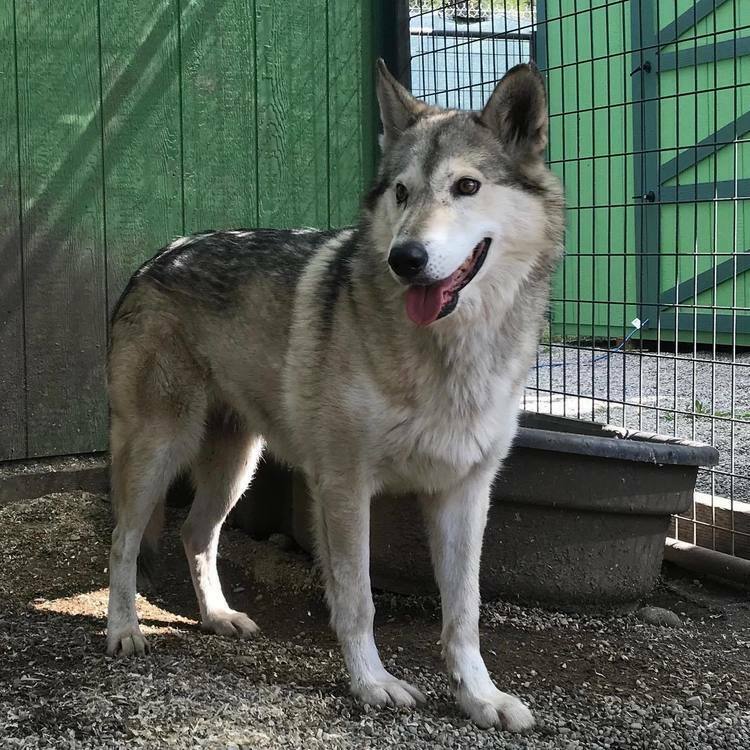
Wolfdogs are animals that contain both domestic dog and wolf ancestry. Depending on their genetics, they may display traits associated with either species — or a complicated mix of both. While wolfdog puppies may appear appealing to people looking for something unusual or exotic, many grow into animals that are extremely difficult to manage in a typical home environment.
Wolfdogs often require specialized care, secure containment, experienced handling, and a deep understanding of canine and wolf behavior. Unfortunately, many are passed from home to home as their natural instincts emerge with age.
Living here at Cat Tales are Akeylah, Fancy, and Grae.
Akeylah arrived in 2018 after spending much of her life chained outdoors as part of a private security perimeter. Repeated escape attempts eventually led to a serious injury to one of her front legs. Although she may appear very dog-like at first glance, her behavior and life experiences require patient handling and specialized care.
Fancy arrived in 2022 after already living in several different homes. Her original owners had expected a very high-content wolfdog, but like many animals produced through wolfdog breeding, her genetics and behavior did not match expectations. Frequent changes in ownership can create anxiety and trust issues, and Fancy continues to slowly build confidence in her permanent home here.
Grae was born in a wolfdog rescue and eventually came to Cat Tales after her owner realized that residential life was not the right environment for her. Grae is playful, intelligent, and especially enjoys playing with her favorite red soccer ball, often inventing games all on her own.
Wolves play an important role in natural ecosystems as apex predators, helping maintain balance among prey populations and habitats. However, wolfdogs are not the same as wild wolves, nor are they the same as domestic dogs. Their unique mix of instincts can make them unpredictable and challenging for inexperienced owners.
Take a moment to observe how these animals communicate through posture, movement, facial expression, and vocalization. Much of canine and wolf communication happens silently through body language rather than sound.
As you continue around the sanctuary loop, you will soon arrive at the coyote habitat.