

Black Bears
You are now visiting the black bear habitat.
Black bears are native to the Pacific Northwest and are among the most adaptable large mammals in North America. Although they are called black bears, their fur can range in color from deep black to brown, cinnamon, and even lighter shades.
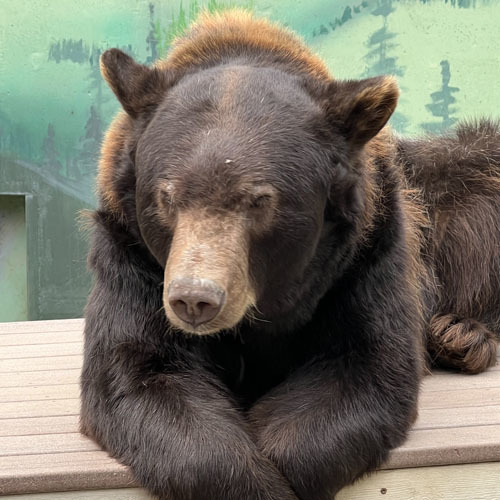
Living here at Cat Tales is Oscar, a cinnamon black bear whose coat often becomes brighter and more orange-colored during the summer months. Oscar arrived as a young cub after being found searching through trash bins near Deer Park, Washington. Attempts were made to reunite him with his mother, but when that was unsuccessful, he came to Cat Tales for lifelong care.
Oscar has lived here for more than 20 years and is known for enjoying swimming, fresh fruit, and even snacking on dandelions and fresh-cut grass.
Black bears are excellent climbers and swimmers. In the wild, they eat a wide variety of foods including berries, roots, insects, fish, and small animals. Their incredible sense of smell helps them locate food from long distances away. In fact, a black bear’s sense of smell is thousands of times stronger than a human’s.
Because bears are so intelligent and food-motivated, it is very important that people do not unintentionally attract them with garbage, pet food, or outdoor food sources. Bears that become too comfortable around human food often end up in dangerous situations that can lead to relocation or euthanasia.
During winter, black bears enter a period called torpor, which is lighter than true hibernation. Their bodies slow down significantly, but they can still wake up if disturbed. Here at Cat Tales, because food is provided regularly, the bears remain more active throughout the winter season.
Take a moment to observe Oscar’s movements and behavior. Despite their large size, black bears can move surprisingly quietly and delicately through their environment.
As you continue around the sanctuary loop, you will soon arrive at the wolfdog habitat.