

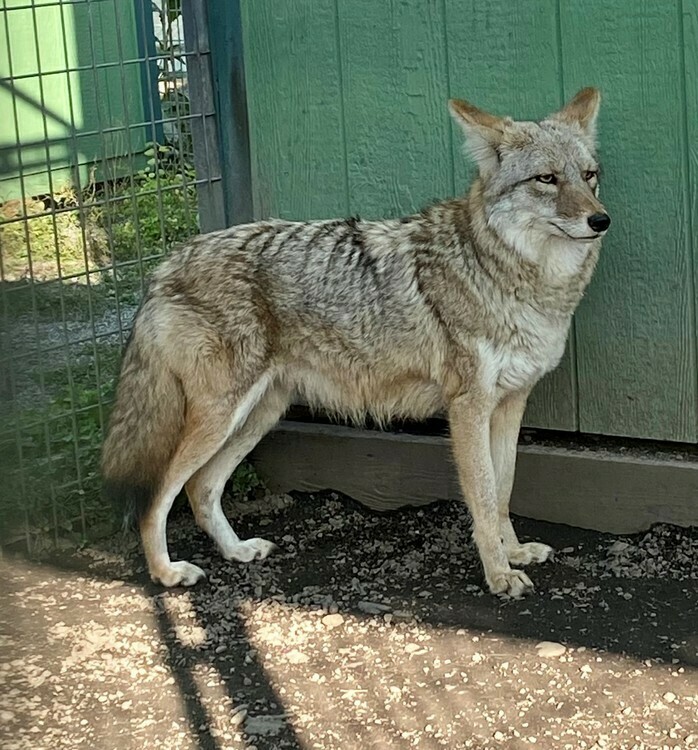
Coyotes
You are now visiting the coyote habitat.
Coyotes are native to the Pacific Northwest and are among the most adaptable predators in North America. Found in forests, deserts, grasslands, suburbs, and even major cities, coyotes have successfully expanded across much of the continent by learning to live alongside changing environments.
Living here at Cat Tales are Sunny and Blue, siblings who arrived as young pups in 2018. Their names come from Indigenous words for coyote — Sunny from the Piute word “Sinawava,” and Blue from the Chinook word “Talapus.”
Coyotes are highly intelligent animals known for their communication skills and strong awareness of their surroundings. Sunny and Blue have extremely sensitive hearing and will often retreat from loud or unfamiliar sounds. During quieter moments, guests may see them playing together, exploring their habitat, or responding to nearby wolfdog vocalizations with their own howls and yip calls.
Coyotes communicate using a wide variety of sounds, including barks, yips, growls, and howls. Interestingly, a pair of coyotes calling together can sound like a much larger group than is actually present.
In many ecosystems, coyotes play an important role by helping control rodent populations and maintaining balance among prey species. They are opportunistic omnivores and can adapt their diet to many different environments. Unfortunately, access to unsecured garbage, pet food, and other human food sources can lead to dangerous habituation and conflict with people.
Coyotes also hold deep cultural significance in many Native traditions, where they are often portrayed as clever tricksters and survivors.
Take a moment to observe how alert and aware these animals are of the world around them. Coyotes rely heavily on hearing, scent, communication, and quick decision-making to survive.
As you continue around the sanctuary loop, you will soon arrive at the Siberian tiger habitat.