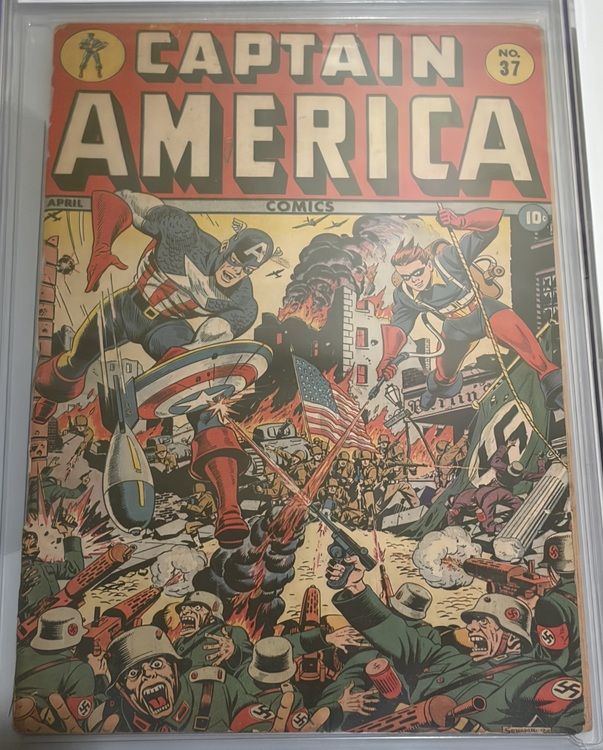
Stop 7: Captain America
Imagined by children of immigrants, superheroes quickly became symbols for confronting injustice. In 1938, Jerry Siegel and Joe Shuster introduced Superman, a character widely recognized as the first modern superhero and the model for those that followed. Superman helped define a new kind of hero, one who championed the underdog and defended the vulnerable. From the very beginning, superheroes took on bullies, corruption, and tyranny in ways that reflected their creators’ experiences and values. In the 1930s-40s, many Jewish creators used superheroes to respond to the rise of fascism, channeling fear, anger, and hope into stories that called for action and modeled ethical responsibility. Characters like Superman and Captain America were already confronting Nazis before the United States entered World War II. These stories often functioned as a form of grassroots propaganda, using bold imagery to shape public opinion and inspire collective action. At the same time, artists documented the realities of war and genocide through firsthand illustrations and stories, preserving experiences that might otherwise have been unseen or unrecorded.
Perhaps more than any other 1940s superhero, Captain America was a propaganda figure designed to enlist first Army men of Britain and then intervention, focusing particularly on the European front, whereas most American entertainment, if anything, focused on the Pacific front. Issue after issue, Captain America comics featured the horrors of the Nazis' conquest and genocide on their covers. Most famously, the cover of Captain America comics 1946, which sees Captain America and his sidekick Bucky liberate a concentration camp as prisoners are being marched into the ovens.
-
Stop 1: Famous Funnies
-
Stop 2: Ganefs
-
Stop 3: Contract with God
-
Stop 4: Maus
-
Stop 5: Miki Maoz
-
Stop 6: Fantastic Four
-
Stop 7: Captain America
-
Stop 8: Code for Buddies
-
Stop 9: Superman
-
Stop 10: Home of Heroes
-
Stop 11: Laboratory