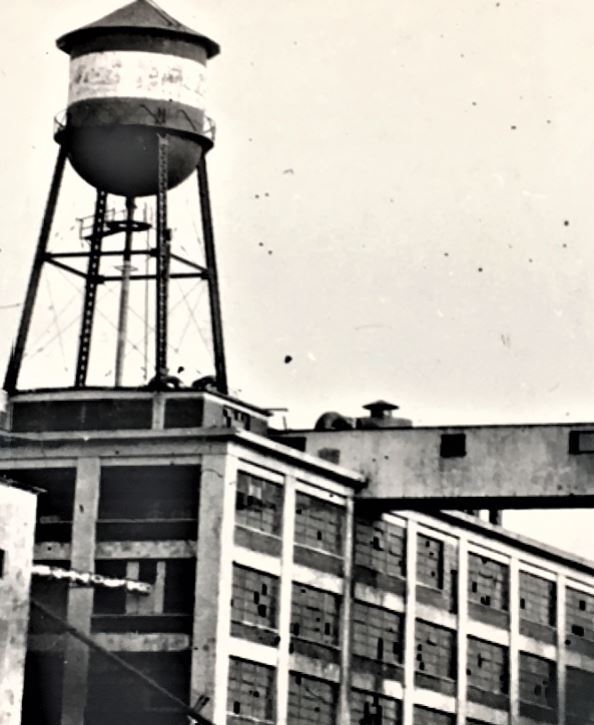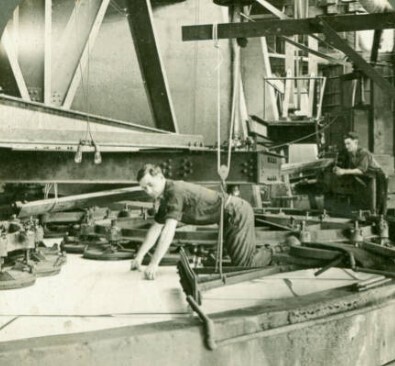
As you pass the former Libbey-Owens-Ford factory (now Pilkington/NSG), picture the glow of furnaces lighting up the night sky… the hum of machinery… and generations of families building their lives here.
Because this isn’t just where glass was made.
It’s where Rossford was born.
Imagine it’s 1898. The air smells like river water and fresh earth. Edward Ford stands here, looking out over 173 acres of possibility. Beneath him—sand, limestone, and water—the essential ingredients for making glass. Nearby, the Maumee River flows steadily, and Lake Erie opens the door to the world. Rail lines run through. Ships pass by.
It wasn’t just a good location—it was the perfect one.
And from that moment, everything changed. The land became known as Rossford, a combination of Edward Ford’s name and his wife, Carrie Ross.
Ford brought workers here from across Eastern Europe—Belgium, Poland, Hungary, Ukraine, Bulgaria, Germany, Slovakia, Italy—and African American workers from Creighton, Pennsylvania. They all brought with them their cultures, recipes, languages, and hopes for something better.
So, what grew here wasn’t just a factory—it was a community. A true American melting pot, forged in fire and glass.
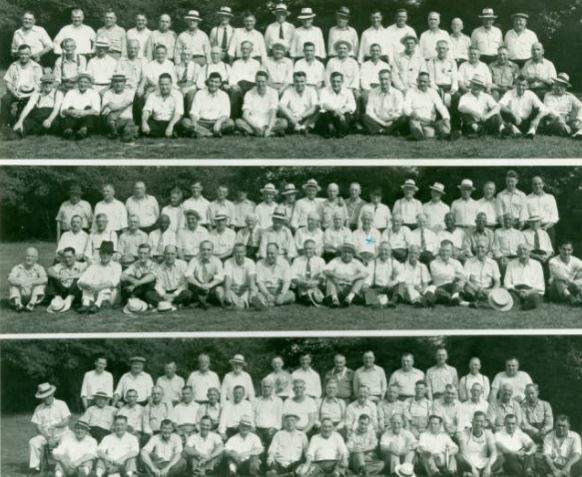
In just two years, the factory was producing millions of feet of glass. By 1930, Libbey-Owens-Ford had become a household name. Nearly every family had a connection. A father, a mother, an uncle, a cousin—everyone seems tied to the glow of Libbey-Owens-Ford.
And the glass made in Rossford didn’t just stay here—it traveled the world.
Libbey-Owens-Ford glass was used to help build the Empire State Building and the original Twin Towers. Libbey-Owens-Ford glass was used to seal America’s most treasured documents—the United States Constitution and the Declaration of Independence—protecting them for generations at the National Archives.
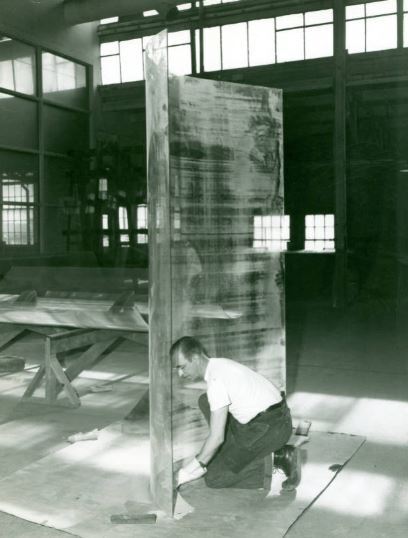
In the 1920s, Libbey-Owens-Ford created safety and laminated glass, making cars and buildings safer everywhere. During World War II, the factory shifted gears. It produced bulletproof glass for tanks and curved nose cones for aircraft like the B-25 and B-29.
And in 1939, Libbey-Owens-Ford glass even made its way to the South Pole with Admiral Richard Byrd—helping maintain a 150-degree temperature difference between the freezing outdoors and his laboratory’s interior.
Over time, the company evolved. In 1986, Libbey-Owens-Ford acquired Pilkington, and it became part of Nippon Sheet Glass in 2006.
The name Libbey-Owens-Ford may have faded, but the legacy hasn’t. Glass is still made here, continuing a story that began more than a century ago.