

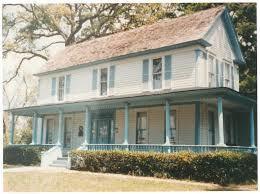
Just a short drive from the park stands the Teague House, at 22 Teague St, one of the few surviving homes from Earpville, the tiny settlement that existed before Longview.
When Mary and Lattimus Teague purchased the house in 1882, it was already considered “old.” Built before Gregg County was formed in 1873, the home once sat along the William Brooks stagecoach line that carried travelers from Monroe, Louisiana, to Tyler, Texas.
With its steep roofline and slender brick chimneys, the Teague House reflects the look of 19th-century New England Gothic farmhouses, a style rarely seen in Texas. Stagecoach travelers along the dusty road often stopped here to rest and water their horses. The surrounding land included what is now Teague Pond, which remains part of the original property.
In 1935, Lattimus Teague sold 20 acres to the City of Longview in memory of his sister, Sarah. That land became today’s Teague Park. The house still stands as a quiet reminder of East Texas pioneer roots, linking the city’s modern pace to its rural beginnings.