

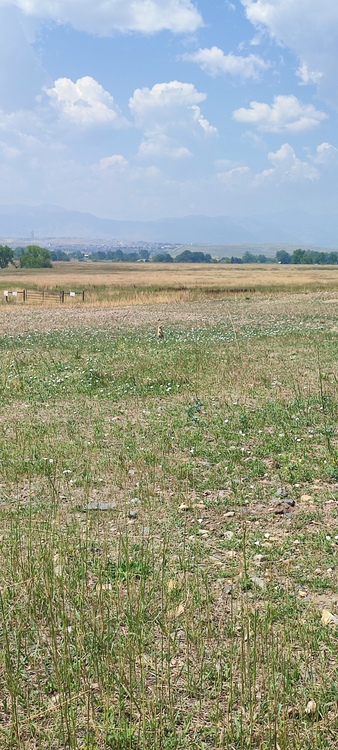
Look out into the prairie. What do you see? Prairie dogs! A prairie dog town may contain 15-26 family groups with subgroups called "wards". The wards are separated by physical barriers such as apartment buildings.
Prairie dogs are considered a keystone species. Keystone species are species that are vital to the overall health of an ecosystem. Prairie dog mounds are often utilized by other species, encourage grass development and increase the renewal of topsoil. They are extremely important in the food chain feeding various animals at the park.
Do you notice how they change their behavior if you get close to them? They can detect predators from a great distance and alert other prairie dogs of the danger with a special high-pitched call.
Scientists have found that prairie dogs use a sophisticated system of vocal communication to describe specific predators. According to them, the calls have specific information as to what the predator is, how big it is, and how fast it is approaching.
Take a look at the prairie ecosystem. Can you spot the small cacti growing between the grasses? These are prickly pear cacti. They can grow in a variety of habitat types and survive from -20F to above 100F. This cactus supplies food for many types of animals. It provides over half the winter diet for the black-tailed prairie dog in one area.
Once you reach the lake, take a look to your right.