Stop 2: Life on the Polk Farm
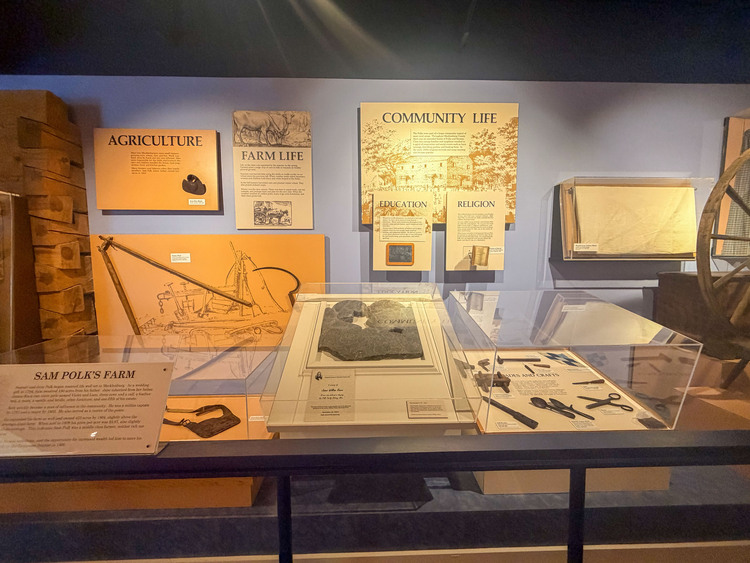
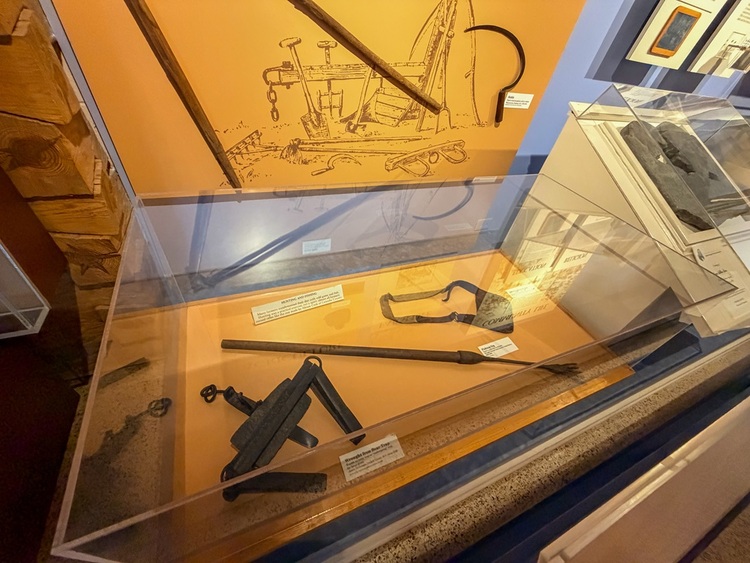
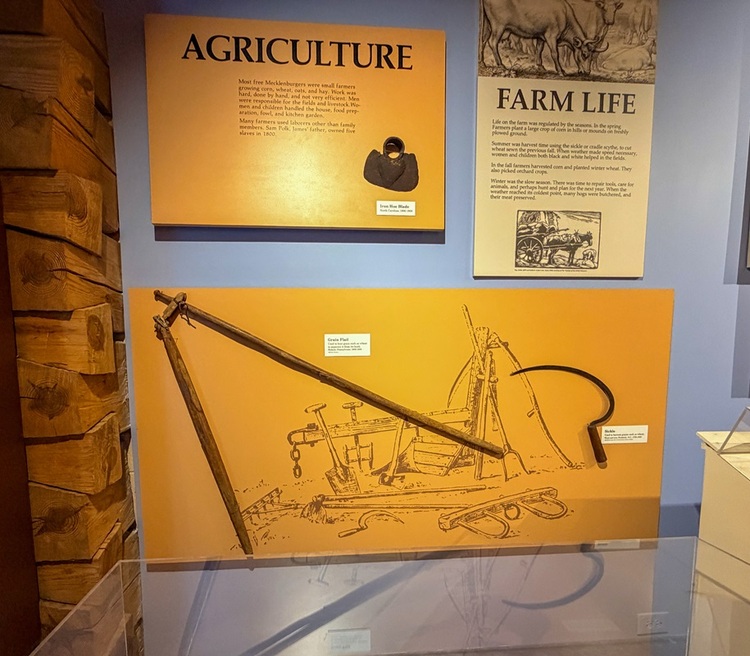
Inside the plexiglass museum cases, there is a bear trap, a fishing gig, and a deerskin hunting bag, all common handmade tools for hunting and fishing. On the wall behind the case are a grain flail for beating grain, a sickle, and an iron hoe blade for harvesting and clearing brush for crops. The Polks and people enslaved by the family likely used similar farming implements in their daily work on the farm, cultivating the fields and hunting wild game.
Find the headstone in the large central case. In the Carolina interior, death was a constant part of life. The soapstone headstone in front of you once marked the graves of Ezra and Mary Alexander, great uncle and aunt to President Polk. If you look closely, you will see mortar between the cracks that is a slightly different color than the rest of the stone. A conservator repaired this stone in 2014. It remains on display inside the museum to ensure its continued preservation. The left side of the stone is dedicated to Ezra Alexander and features a sun symbol above his name. The right side is in memory of his wife, Mary, who has a half-moon above her name. Their epitaphs read,
“Sacred Memory, EZRA ALEXANDER, who deceased on the 6th of July. 1800 Aged 60 Years. MARY ALEXANDER who deceased on September 8th, 1814, Aged 70 Years. farewell flesh with all its woe, more with you I’ll...” the rest of the inscription is lost.
Above the headstone, slightly to the right, is a small leather-bound book. This book contains a collection of Psalms and Hymns compiled by Dr. Isaac Watts, an 18th-century English hymnwriter and theologian.5 Presbyterians, including the Polk family, held Dr. Watts in high regard. Maria Polk’s gravestone, which you can see in the cemetery outside, references his work.
The next stop will be in front of the red square sign labeled #3. You will see a large spinning wheel, cradle, and household goods. Scan the QR code, or press next on your device.
-
Introduction
-
Stop 1: American Indian and Catawba Nation
-
Stop 2: Life on the Polk Farm
-
Stop 3: Childbirth
-
Stop 4: Southern Cotton
-
Stop 5: The Spirited Age: 1820-1850
-
Stop 6: The Whig Party and the Election of 1844
-
Stop 7: James K. Polk’s Presidency
-
Stop 8: War with Mexico
-
Stop 9: Santa Anna versus the new state of Texas