Stop 1: American Indian and Catawba Nation
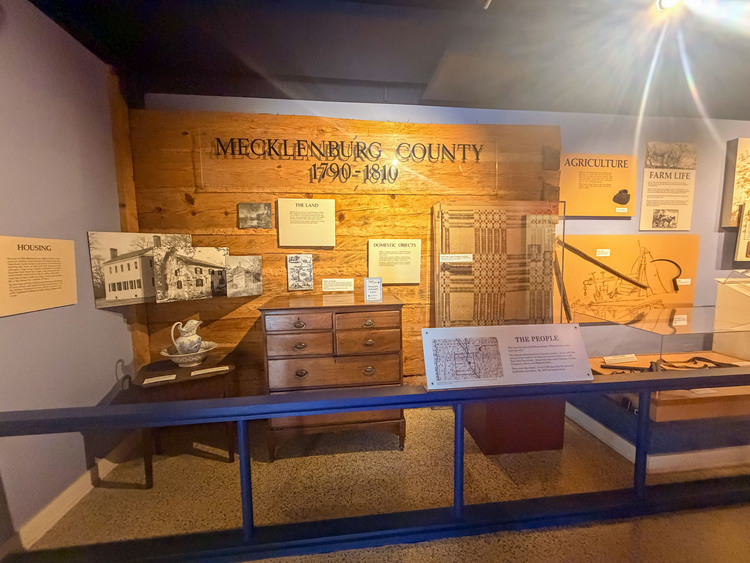
In front of you on the hand-grained table, there is a blue-and-white Columbian Star basin and pitcher set, a wooden chest of drawers, a quilt coverlet, photographs of other historic homes in the area, and images of the plants and animals of the Carolina interior, during the time the Polks lived here. These objects and pictures provide a glimpse into a typical Scots-Irish family home, which was the Polks’ ancestral heritage. The cabins you see outside are similar to the style of home the Polks and their neighbors lived in during the early 1800s.
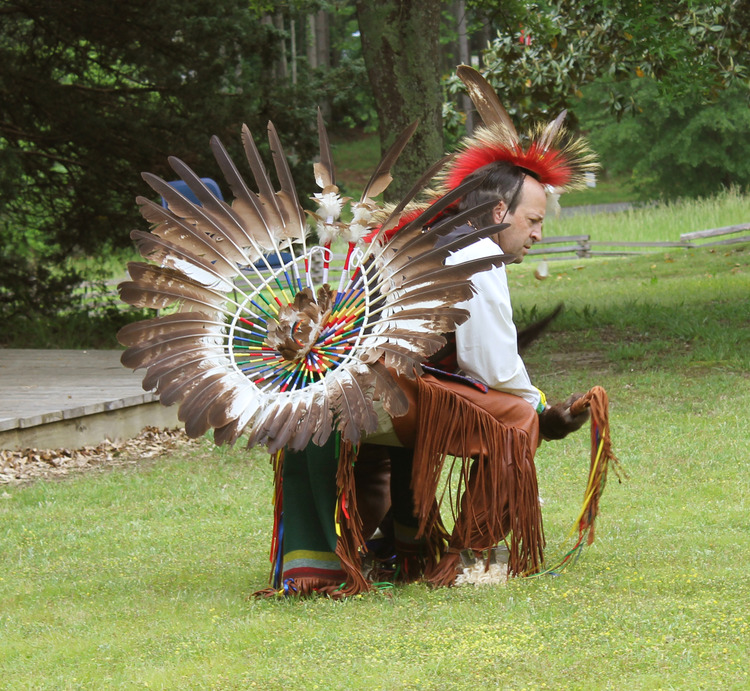
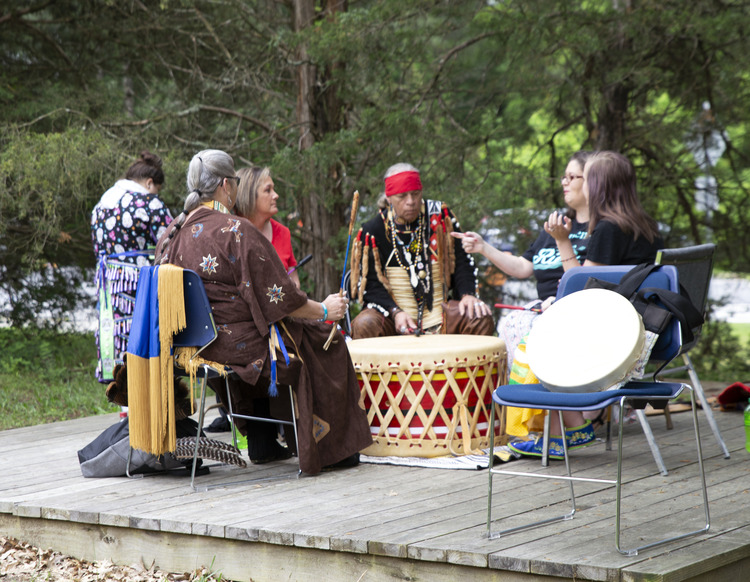
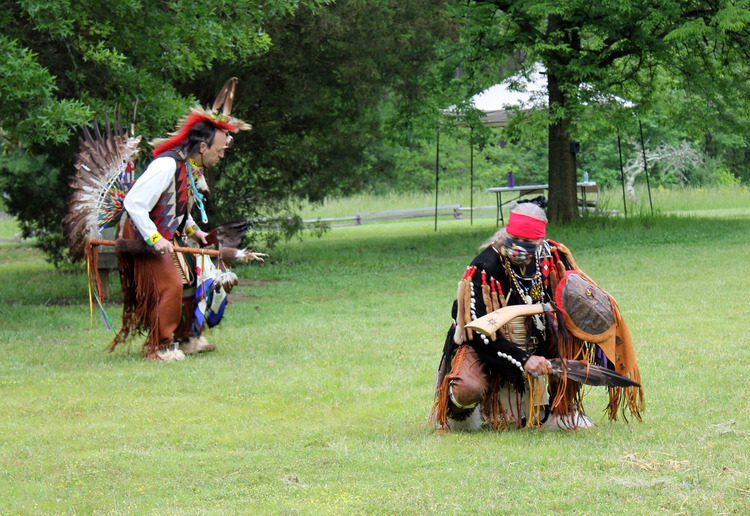
Before the Polks settled this land, Indigenous people lived here for thousands of years. The Native people living in this area, primarily spoke either Catawban or Siouan (SOO-uhn), two common languages in the Piedmont area.
English naturalist John Lawson traveled through both Carolinas to document the region’s plants and animals. During his journey, he also recorded his encounters with Indigenous communities who lived on the land, including the Catawba, Waxhaw, Wisack, and Sugaree (SHUH-gar-ee).
Down and to your right is a map of The Trading Path, also known as the Occaneechi Path, a road with thousands of years of history. A section of the Trading Path, now called Lancaster Highway, runs next to the site. Stretching from what is now Philadelphia to present-day Augusta, Georgia, Indigenous people actively engaged in trade along this important route. As more wagon parties journeyed southward toward the Appalachian Mountains, the Trading Path became known as the Great Philadelphia Wagon Road.
During Lawson’s 59-day journey in 1700, he observed Native communities in well-ordered villages practicing structured agriculture and farming. Lawson described the people in mostly positive terms, describing the women as beautiful and industrious, with children running and playing outside. He described Native people as pleasant and mild-mannered, dexterous with a canoe, and with extensive knowledge of the plants and animals in the area, as well as the knowledge to harness healing properties from natural resources.
By the time James K. Polk was born, the Native population was much lower than it had been 100 years prior during John Lawson’s travels. The Indigenous people of the Americas had no natural immunity to the diseases brought to the continent by Europeans. Due to declining populations, local tribes in the Piedmont region merged with the Catawba for continued protection and survival. More than 25 tribes joined the Catawba tribe, forming a confederation of Indigenous communities. Irish American trader James Adair, who came through the area 75 years after Lawson, described the people as even more devastated by war and disease, with a severely reduced population.
Proceed to the next red, square sign labeled #2. You will see a large headstone under the signs labeled “Agriculture,” “Farm Life,” and “Community Life.” Scan the QR code in the square, or press next on your device.
-
Introduction
-
Stop 1: American Indian and Catawba Nation
-
Stop 2: Life on the Polk Farm
-
Stop 3: Childbirth
-
Stop 4: Southern Cotton
-
Stop 5: The Spirited Age: 1820-1850
-
Stop 6: The Whig Party and the Election of 1844
-
Stop 7: James K. Polk’s Presidency
-
Stop 8: War with Mexico
-
Stop 9: Santa Anna versus the new state of Texas