LIONFISH + MORE
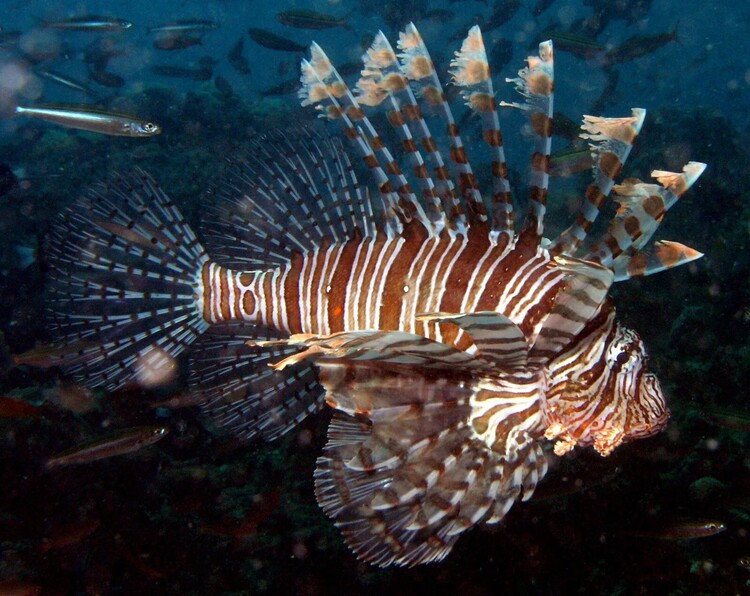
These beautiful fish have beautiful flowing dorsal spines and wide pectoral fins that may resemble the regal mane of the male lion. Though, you might not want to get too close, its spines deliver a powerful, venomous sting!
Much like its namesake, the lionfish is the king of its ecosystem! It is native to the Indo-Pacific waters but has become an aggressively invasive species in the western Atlantic Ocean and Caribbean Sea. With no known predators, its population is steadily growing. Not even sharks go after these ornate invaders!
Lionfish are harmful to coral reefs and have been shown to destroy the wellbeing of other native marine life. This is the second tank in a 2-tank display. Lionfish will eat all the other fish in the area so although it appears that they share a tank with other species, these are actually two separate tanks.
SWIPE PHOTO TO RIGHT TO SEE MORE AMAZING FISH
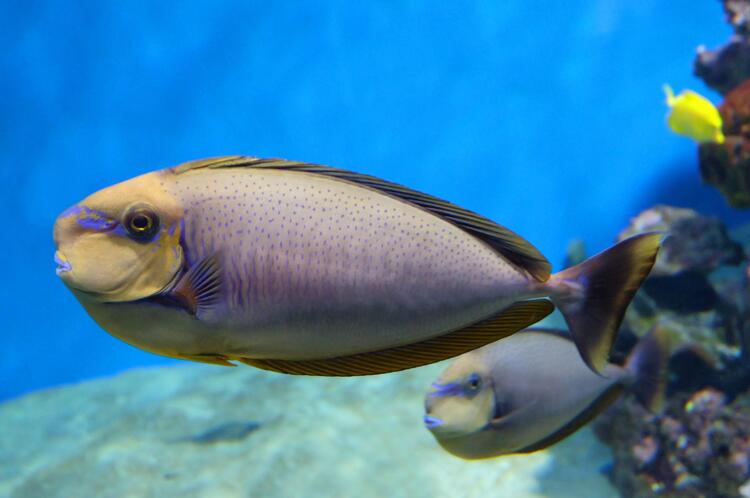
BIGNOSE UNICORNFISH.
The bignose unicornfish is named for the prominent bump that develops on its head as it matures. This species feeds primarily on algae, playing an important role in keeping coral reefs from becoming overgrown. Unlike many reef fish that stay close to shelter, unicornfish are strong swimmers and are often found cruising open water near reef edges.
- SWIPE PHOTO TO RIGHT TO SEE MORE AMAZING FISH
-
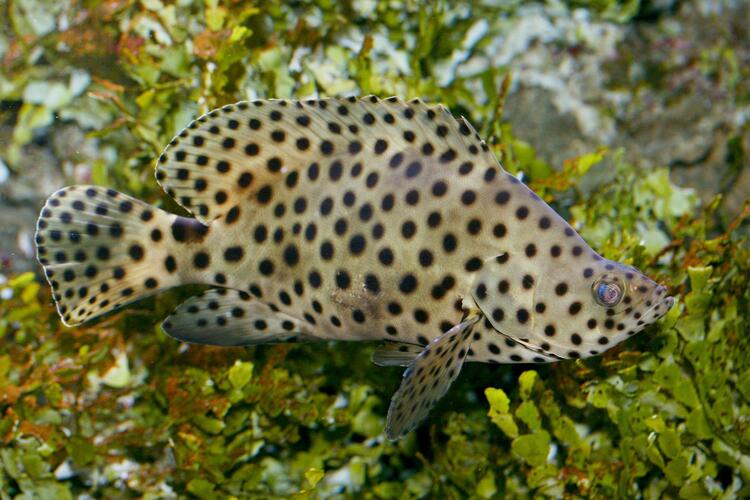
PANTHER GROUPER.
-
Panther groupers undergo a dramatic change as they grow, beginning life small and patterned before developing into large reef predators. Their spotted coloration helps break up their outline, making them less visible to prey. They hunt using powerful suction, rapidly opening their mouths to pull prey in whole.
- SWIPE PHOTO TO RIGHT TO SEE MORE AMAZING FISH
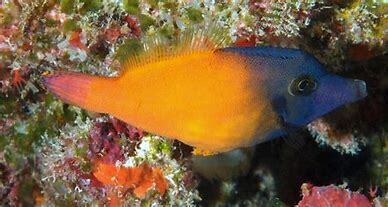
- FLAME FILEFISH.
- Flame filefish are part of a group of fishes known for their rough, sandpaper-like skin rather than typical scales. They feed on small invertebrates and algae, carefully picking at surfaces on the reef. A stiff dorsal spine can be raised and locked in place as a defense, helping deter predators.
-
TRIGGERFISH + MORE
-
TROPICAL FISH
-
MORE TROPICAL FISH
-
SKUNK CLOWNFISH + MORE
-
PICASSO TRIGGERFISH
-
LIONFISH + MORE
-
AXOLOTL
-
BUG SHACK
-
BABY ALLIGATORS
-
PADDLEFISH
-
ALLIGATOR SNAPPING TURTLES
-
CARPET PYTHON
-
ALBINO COMMON SNAPPING TURTLE
-
POND TURTLES
-
SHORELINE TOUCHPOOLS
-
ZEBRA MORAY EEL
-
RED-TAILED BUTTERFLYFISH
-
MORAY EELS + MORE
-
SHARK TUNNEL
-
STINGRAYS
-
CLEANER SHRIMP
-
JAWFISH + MORE
-
EQUIPMENT ROOM
-
MOON JELLIES
-
Eibli mimic tang and Eibli angelfish
-
PAJAMA CARDINALFISH
-
SEAHORSES
-
SWELL SHARKS + MORE
-
MOON JELLIES
-
LIVE CORAL TANK