

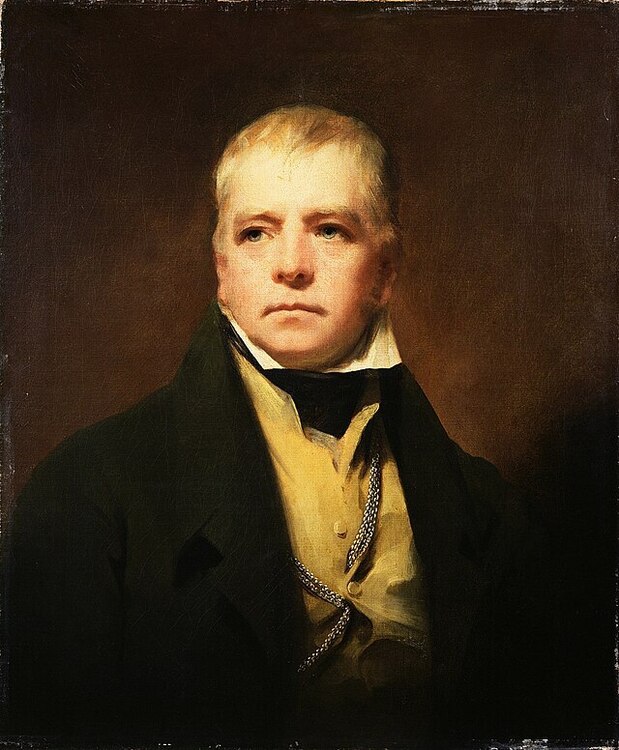
The Poet ~ Sir Walter Scott was born in Edinburgh, Scotland on 15 August 1771 and passed away in Abbotsford, Scotland on 21 September 1832. He was a Scottish novelist, a prolific poet, historian and biographer, often recognised for his evocative depictions of Scottish landscapes and portrayals of Scottish history and society. These include “Ivanhoe”, “Rob Roy” and “Waverley”. Scott had a massive impact on European and American literature. He had a permanent limp due to a bout of Polio he suffered as a baby. In 1826, Scott campaigned for Scotland to retain its own bank note, and therefore, all the notes bear his portrait in commemoration. An impressive monument was built in his honour in Edinburgh and is one of the biggest monuments in the world dedicated to a writer.
Our Reader ~ Nathan Wallis is a renowned New Zealand neuroscience educator, speaker, and former university lecturer, celebrated for making complex brain science accessible and engaging. With a background in early childhood teaching, child therapy, and social service management, he spent over 15 years lecturing in Human Development and is the founder of X Factor Education. A proud descendant of Ngāti Kahu ki Whangaroa, he blends academic insight with lived experience as a father and foster parent, offering practical pathways for others navigating parenthood.
My Native Land
Breathes there the man, with soul so dead,
Who never to himself hath said,
This is my own, my native land!
Whose heart hath ne’er within him burn’d,
As home his footsteps he hath turn’d
From wandering on a foreign strand!
If such there breathe, go, mark him well;
For him no Minstrel raptures swell;
High though his titles, proud his name,
Boundless his wealth as wish can claim;
Despite those titles, power, and pelf,
The wretch, concentrated all in self,
Living, shall forfeit fair renown,
And, doubly dying, shall go down
To the vile dust, from whence he sprung,
Unwept, unhonour’d, and unsung.