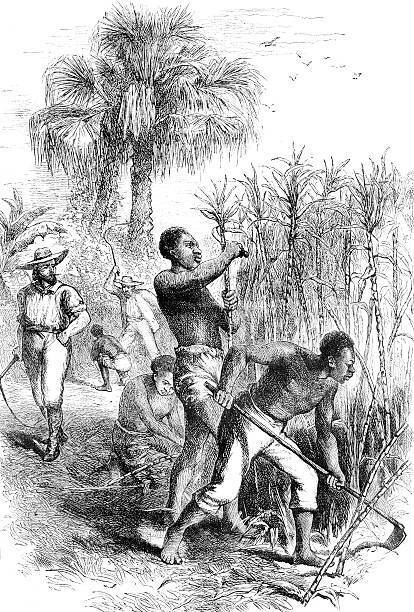
The Growth of the Institution
By the late 1700s and early 1800s, slavery was deeply entrenched, especially in the South. Cotton, rice, sugar, and tobacco became the backbone of the American economy with industries built on the forced labor of enslaved men, women, and children.
Although only about one-quarter of Southern whites owned slaves, many who did not still supported slavery. Why? Because the system gave them a sense of superiority and a hope that one day, they too might own slaves. It was a racial hierarchy designed to keep white citizens above Black people in every aspect of life.
Enslaved people labored in many ways: some in the fields, others as carpenters, blacksmiths, or domestic workers in the household. House servants often lived in close contact with the family, but this did not mean that their lives were easier. They had very little privacy and could be called to work at any moment.
Education was tightly restricted. After slave rebellions like Nat Turner’s uprising in 1831, laws were passed forbidding enslaved people from learning to read or write. Yet, many resisted in secret by teaching each other, reading from the Bible, and holding onto African oral traditions.
By 1850, the Fugitive Slave Law made even “free” states unsafe for Black people, demanding that escaped slaves be returned to their owners and criminalizing anyone who helped them. Freedom seekers could be hunted down, and even free Black men, women, and children risked being kidnapped and sold into slavery.
Thought Prompt:
Standing here, imagine what choices you might have made. Would you risk punishment to secretly learn to read? Would you break the law to help someone escape?